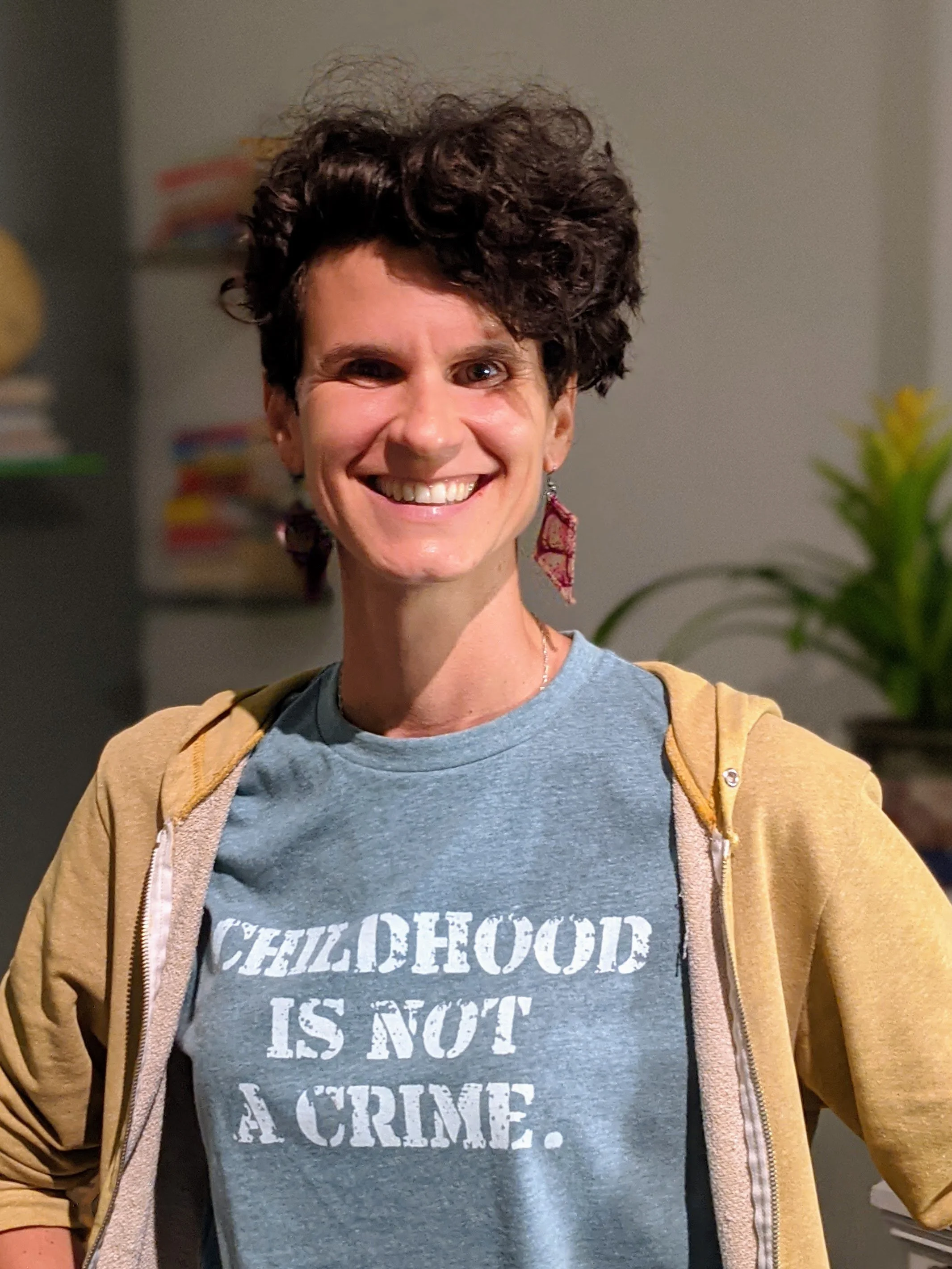
Hi, I’m Marion!
With a primary teaching degree earned avec Grande Distinction in Belgium (HEFF, 2005), I have spent the past two decades exploring education across cultures, languages, and pedagogical movements. I began my career as a primary school teacher in Belgium before moving to Louisiana, where I taught in a French‑immersion program and deepened my understanding of bilingual learning environments.
Driven by a passion for learner autonomy, I later co-founded and directed ALCNO, a self‑directed education center in New Orleans. This work grew out of years of training with Agile Learning Centers, participation in the 4.0 Schools incubator, and engagement with international conferences on alternative and self‑directed education. I have also volunteered in homework support programs, completed a three‑week internship at the legendary Summerhill School in the UK, and earned certification in the Positive Discipline approach.
Today, I support parents and educators in both Belgium and the United States, helping them cultivate environments where children and teens are recognized as full human beings. My philosophy rejects both authoritarianism and laissez‑faire: I believe in collaborative tools rather than punitive approaches, and in a simple principle that has guided my work for years: when autonomy is supported within clear boundaries, collaboration and flourishing become possible.
My Approach
Young people are people
I believe that children and teenagers are people in their own right. They need guidance, support, and clear boundaries, but they also deserve to be treated with respect and to have a meaningful voice in the relationships that shape their lives.
From Good Intentions to New Reflexes
The greatest challenge is often not adopting new ideas about parenting or education, but developing new reflexes. Many of us were raised with certain habits and responses that emerge automatically when we feel stressed, frustrated, or triggered. Changing those patterns takes more than good intentions—it takes practice. That is why my workshops are highly interactive and focused on real-life situations, practical tools, and opportunities to reflect on our everyday interactions with young people.
Boundaries and Autonomy
This approach invites us to move beyond both authoritarian and laissez-faire models. Boundaries remain important: they help create the safe and healthy environment that children need to grow and thrive. At the same time, autonomy, collaboration, and mutual respect are essential ingredients for developing responsibility, confidence, and strong relationships.
Growth with Compassion
This work can sometimes challenge long-held assumptions and encourage us to question our own habits. Yet growth does not come from self-judgment. Throughout the process, I encourage participants to approach themselves with the same compassion they strive to offer the young people in their lives.